
August 2026 · 8 min read · Michael Thomas
Renovating a heritage home in Newcastle: what you need to know
Newcastle's most loved streets — Cooks Hill, The Hill, Hamilton, Islington — are full of century-old homes that deserve better than a gut-and-gyprock job. Here's how heritage renovation really works, from a builder whose last one was named an HIA Housing Awards finalist.
What 'heritage' actually means for your house
In NSW, your home can be a listed heritage item, or — far more commonly in Newcastle — sit inside a heritage conservation area. Either way, changes visible from the street are controlled, and your renovation will generally need a development application with a statement of heritage impact rather than a fast-tracked approval.
That sounds intimidating, but the principle is simple: keep and restore what gives the streetscape its character, and be thoughtful about what you add. Councils are generally far more flexible about the rear of the home than the front.
The pattern that works: restore the front, reimagine the back
The most successful heritage renovations follow a clear logic — the front rooms and facade are brought back to their former glory, while the tired add-ons behind (there are always add-ons) are replaced with a modern design that suits how you actually live.
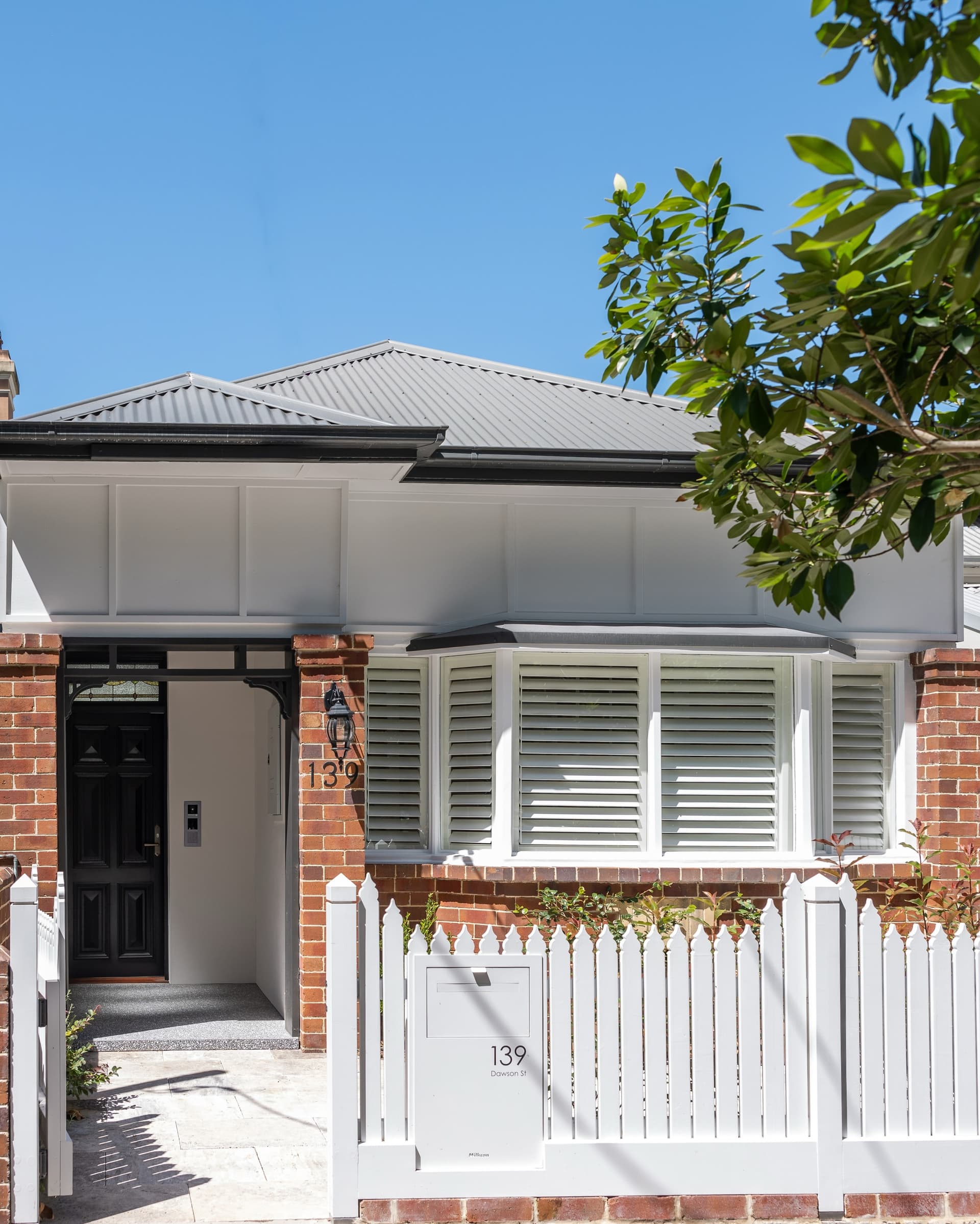
That's exactly how we approached our Dawson Street project in Cooks Hill: a century-old cottage in poor condition, under heritage restrictions. The front was faithfully restored — down to keeping the original cast-iron cooker in the new kitchen wall — while the rear became a modern home with a double-sided sandstone fireplace and an outdoor kitchen. That project was named an HIA Housing Awards finalist.
What heritage work demands of a builder
Heritage renovation is a different discipline from new work. Original materials behave differently — lime mortar, hardwood frames, lath-and-plaster — and the details that matter, like cornices, corbels and window joinery, need trades who've done this before, sometimes specialist ones.
On a commercial job on Bolton Street, we restored a 140-year-old ornate timber ceiling working alongside a specialist cabinet maker — the client's words were that the techniques we suggested 'permitted a faithful and rarely preserved outcome'. That's the standard heritage fabric deserves.
Budget and timeline honesty
Heritage work costs more than the equivalent modern renovation and takes longer to approve — that's just true. Restoration trades are slower and scarcer, approvals add months not weeks, and old homes hide surprises: rot, past 'repairs', undocumented structure.
Budget a stronger contingency than the usual 10–15%, and get the approvals pathway mapped before you commit to a design. The result — a home with genuine character that a new build simply can't replicate — is why people do it anyway.
Common questions
- Do I need a DA to renovate a heritage home in Newcastle?
- Generally yes — work on heritage items or in conservation areas typically needs a development application with a heritage impact assessment, rather than fast-tracked CDC approval. The rear of the home usually has far more flexibility than the street-facing front.
- Can you extend a heritage home?
- Usually, yes — councils are typically most concerned with what's visible from the street. The proven pattern is restoring the front faithfully and rebuilding the rear as a modern addition.
- Has MBC done award-recognised heritage work?
- Yes — our full-home renovation of a century-old Cooks Hill cottage under heritage restrictions was named an HIA Housing Awards finalist, and our Bolton Street commercial project included the faithful restoration of a 140-year-old ornate timber ceiling.